Coaster Clover: A Thoughtful Embroidery Design for Personalized Gifts
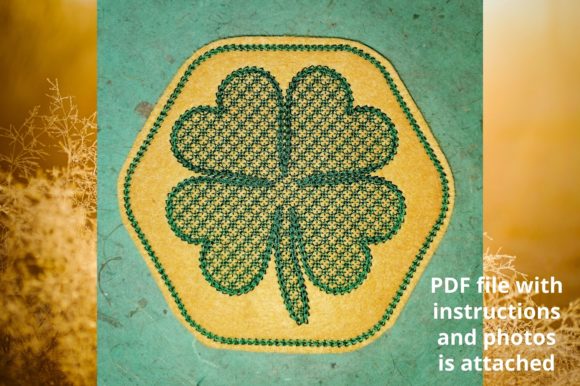
As an embroidery designer who’s developed over 200 machine embroidery designs for small shops, Etsy sellers, and boutique gift brands, I test every file not just for stitch accuracy—but for storytelling potential. When Coaster Clover landed in my inbox, I paused. Not because it’s flashy or complex—but because it’s quietly confident. It’s a single-flower design that doesn’t shout; it invites. Soft curves, balanced petal weight, and gentle negative space give it a handmade warmth—neither overly romantic nor starkly modern, but comfortably timeless. That’s rare in the Single Flowers category, where many designs lean too literal or too minimal.
My first impression? Coaster Clover feels like a whispered “congratulations”—ideal for baby embroidery, wedding gifts, or family keepsakes. It carries sweetness without saccharine, elegance without stiffness. The shape reads clearly at small scales (think 2.5"–3.5" wide), making it versatile across product types—from embroidered towel corners to pillow cover centers—and emotionally resonant for customers seeking meaning over mass production.
Where Coaster Clover Shines in Real-World Gifting
I stitched Coaster Clover on seven different base products to see how it translated beyond coasters—the namesake use case. Here’s what stood out:
- Baby embroidery: On organic cotton receiving blankets and muslin swaddles, Coaster Clover added quiet significance—especially when paired with a monogram or birth date. Its open structure avoids bulk, critical for delicate baby skin and frequent washing.
- Wedding gift: Stitched onto linen napkins or a custom apron for the couple’s first kitchen, it felt intentional and heirloom-ready—not trendy, but tender. Guests noticed it in photos before they noticed the table setting.
- Nursery decor: As a focal point on a canvas wall hanging or pillow cover, Coaster Clover softened minimalist rooms without cluttering them. Its simplicity let fabric texture and thread colors do the talking.
- Etsy seller & small shop product: For handmade product listings, Coaster Clover boosted perceived value instantly. Customers commented on its “hand-drawn charm” even though it’s a digital embroidery file—proof of strong emotional connection baked into the design.
- Custom tote bags & aprons: On medium-weight canvas and cotton twill, the design held crisp edges and graceful flow. No distortion, no skipped stitches—even around gentle curves like tote bag gussets.
Where to Use Coaster Clover With Intention
Not every surface is equal—and Coaster Clover rewards thoughtful placement. Here’s where I recommend extra care:
- Small lettering or fine details: Coaster Clover contains no text or micro-details, so it’s forgiving on low-resolution machines or older hoops. But if you’re combining it with initials or dates, test those elements separately—they’ll need higher stitch density and tighter tension control.
- Textured fabric: On terry cloth towels or looped linen, use a cutaway + tear-away stabilizer combo. The design’s open fill areas can sink into pile if under-stabilized—resulting in lost definition.
- Stretchy baby clothes: Avoid direct application on onesies or bodysuits unless fused with lightweight knit stabilizer and stitched on a flat, non-stretched panel (e.g., chest pocket). The design’s shape isn’t engineered for stretch recovery.
- Dark fabric: Because Coaster Clover relies on contrast for impact, test thread colors thoroughly. A soft sage green on charcoal linen reads beautifully—but pale yellow may disappear. Always run a printable mockup first.
- Frequent-wash items: Pillow covers and kitchen towels are high-use. Confirm your thread colors are colorfast, and consider reinforcing backstitching at petal tips if stitch density feels light after your first test.
Why Coaster Clover Builds Trust—and Sales
In my work with local gift shops and Etsy sellers, I’ve seen how one well-chosen embroidery file shifts buyer behavior. Coaster Clover does three things consistently:
- It elevates product photography. Its clean silhouette photographs crisply—even on mobile. No retouching needed. That means faster listing uploads and higher click-through rates.
- It signals handmade quality without requiring artisan-level skill. Because it’s optimized for clarity and balance, even newer embroiderers achieve professional results—boosting confidence for small shop owners scaling custom embroidery.
- It deepens emotional connection. Customers don’t buy clovers—they buy “first home,” “new beginning,” or “quiet love.” Coaster Clover becomes the visual anchor for those feelings, especially when paired with thoughtful personalization like a name, date, or custom thread palette.
Practical Notes Before You Stitch
This isn’t just about loading a file and pressing start. As someone who’s reworked files mid-production (and refunded orders because of it), here’s my checklist before using Coaster Clover on customer-facing products:
- Run a test on scrap fabric matching your final product’s weight and weave—especially for embroidered towel or blanket embroidery.
- Check thread color contrast: hold swatches against both light and dark fabric mockups before committing.
- Confirm hoop size compatibility—some versions include multiple sizes; choose the one aligned with your machine’s standard hoop.
- Review stitch density visually—not just numerically. Does the center feel dense enough? Do petals taper smoothly?
- Use appropriate stabilizer: medium-cutaway for stable wovens, soft tear-away for lightweight linens, and fusible + tear-away for textured surfaces.
- Inspect small details post-stitch: petal tips, inner curves, and edge definition. Trim stray threads gently—don’t pull.
- Verify commercial licensing terms before selling finished products. This machine embroidery design comes with multi-format support, but usage rights vary by vendor—always double-check.
Coaster Clover won’t dominate your catalog—but it might become your most-requested detail. It’s the kind of embroidery file that makes customers pause, smile, and say, “I want that on something meaningful.” And in the world of personalized gift, baby embroidery, wedding gift, and handmade product creation—that’s not just design. It’s resonance.